Scientists Converted a 3D Printer into a Bioprinter for Living Bacteria
Researchers from the University of Rochester and Cornell University modified a Creality Ender 3 to print living bacterial structures up to 100 layers thick.
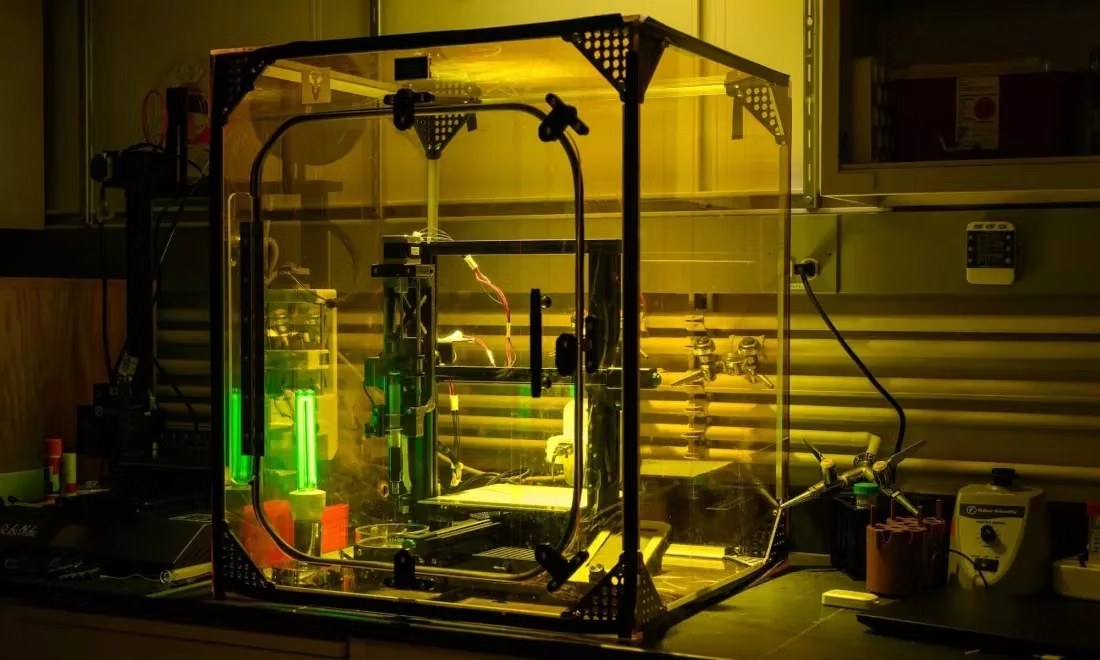
Instead of the standard print head, the scientists installed a pump with a syringe to dispense bioink. The system also retracts the material during nozzle movements, which helps form sharper edges. The modification cost approximately $450, whereas commercial bioprinters can cost over $100,000.
To prevent the printed layers from deforming, the print head is placed in a suspension of gelatin or agarose particles with calcium chloride. This supports the structure while the alginate-based ink sets. Using this setup, hollow cylinders and lattices can be created. Previously, homemade bioprinters typically struggled with structures taller than 20 layers due to the sagging of soft gel.
The gelatin medium can be removed after printing. The agarose medium remains around the product and acts as an incubator: with nutrients, *Escherichia coli* remained viable for four weeks. This will enable the creation of artificial biofilms for research into antibacterial technologies, contaminated water purification, and plastic decomposition. The researchers published the STL files and G-code control software on GitHub.